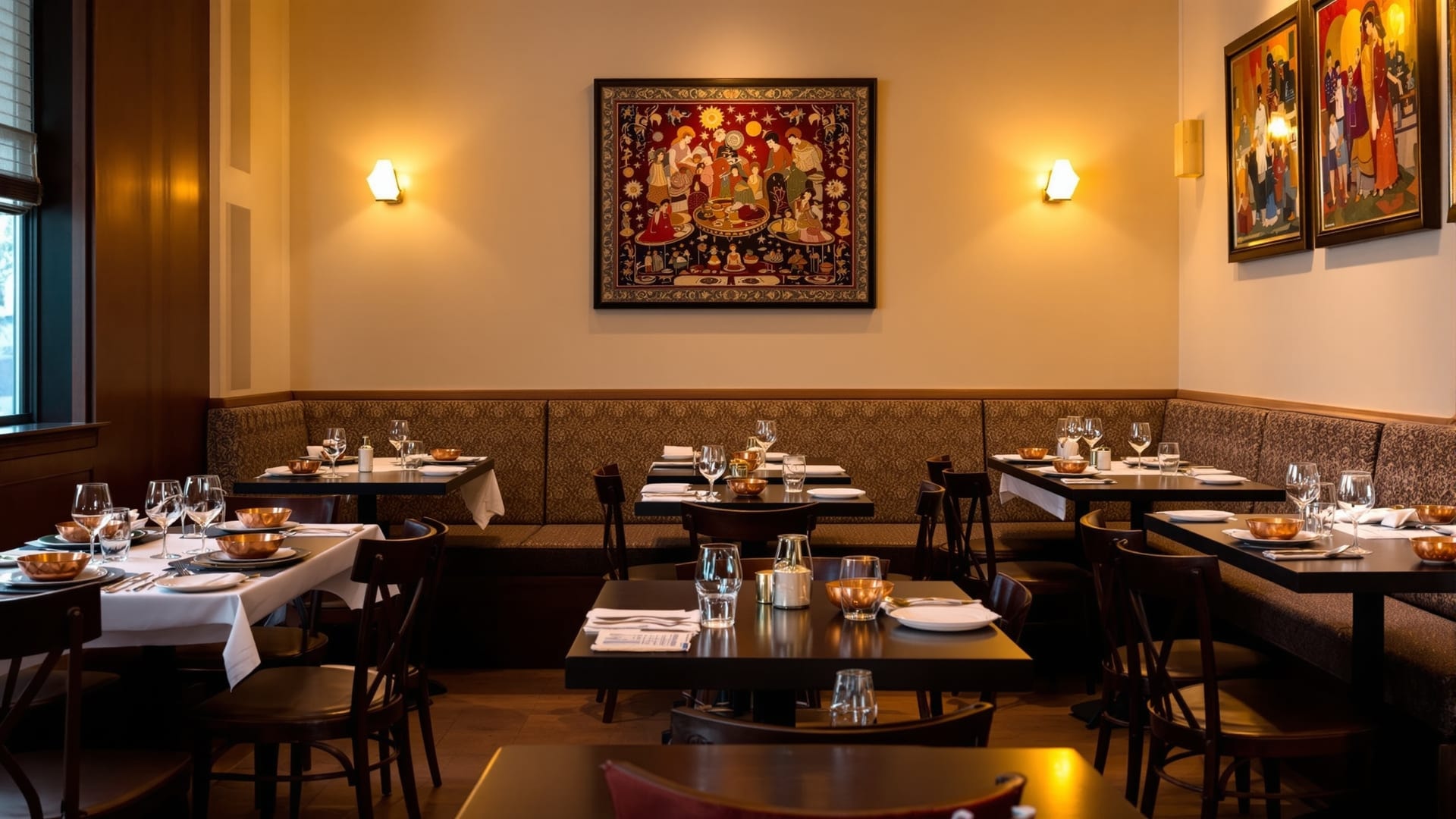
Spice9 was an Indian restaurant in north Columbus, Ohio. It opened at the start of the 2020s, fed the north side for about four years, and closed. The kitchen served a broad Indian menu, from dum biryani and tandoor dishes to an unusually deep vegetarian selection.
Spice9 is permanently closed. Nothing on this site is an invitation to visit, order, book or pay. There is no dining room to walk into and no kitchen at the other end of a delivery app. What follows is written in the past tense on purpose.
What Spice9 was
It was a sit-down Indian restaurant of the kind that anchors an American suburb — not a grand-occasion place and not a counter, but somewhere with tablecloths, a buffet at lunch, and a dinner menu long enough to argue over. Spice9 used the line "Indian Cuisine in its finest Form", and underneath it, in smaller type, the four ways the restaurant actually worked: dine-in, takeout, catering, delivery.
The kitchen cooked across the north of the subcontinent and into the Deccan. Tandoor dishes and rich, tomato-and-cream gravies on one side; Hyderabadi-style dum biryani, sealed and steamed, on the other. Indo-Chinese fried rice sat on the same menu as matar paneer, which is exactly how a working Indian restaurant menu is built in practice — regional purity is a critic's idea, not a kitchen's.
The parts of it worth keeping
Four things came up again and again in what people wrote about Spice9, and each has a page here.
- The buffet. A weekday lunch line, deep in vegetarian dishes, with a stack of hot garlic naan coming out of the tandoor rather than sitting under a lamp. How an Indian lunch buffet actually works →
- The biryani. Hyderabadi dum biryani in several forms — vegetable, chicken, goat, egg. What dum biryani is and why it takes so long →
- The vegetarian half of the menu. Not a token section. Paneer alone ran across the appetiser, gravy and rice pages. Vegetarian Indian dining, properly explained →
- The tandoor. The clay oven that made the naan, the tikka and the kebabs, and the reason an Indian restaurant kitchen is built the way it is. Inside the tandoor →
Reading a menu you can no longer order from
The menu lists the dishes Spice9 served, grouped the way the kitchen grouped them. It carries no prices and no ordering links, because both would be a lie — prices from a closed restaurant are a historical curiosity at best and a trap at worst. What the list is genuinely good for is reading: it shows how a mid-sized American Indian restaurant balances a menu, and it names dishes clearly enough that you can go and find them somewhere still cooking.
Some of those names are borrowed from a category Western menus invented. "Curry" is not one dish and never was; it is a British-era catch-all that flattened dozens of distinct gravies into a single word, and the long history of curry as a category is a useful corrective before reading any Indian menu, including this one.
Service, as it was structured
Spice9 ran a split service — a lunch period built around the buffet, then a break, then a longer à la carte dinner. That shape is common to almost every Indian restaurant in the American suburbs and it explains a lot about the food: the buffet dishes were the ones that hold, and the dinner menu carried everything that has to be finished to order.
Alongside the dining room it ran takeout and delivery and a catering operation, which for a restaurant of this size is usually where the margin actually lives. Both pages here describe how that side of an Indian restaurant works rather than offering it — again, there is nothing to order.
The Spice9 kitchen
Independent restaurants disappear quietly. The dining room is emptied, the phone line is disconnected, and within a year or two the website lapses and the whole record goes with it — the dish names, the way the menu was organised, the small evidence that a particular kitchen existed on a particular road for a particular few years.
Spice9's history covers what the kitchen cooked, how it served customers, and what its dishes are. The restaurant is closed and is not a business.
Start with the story of the restaurant, or go straight to the menu.