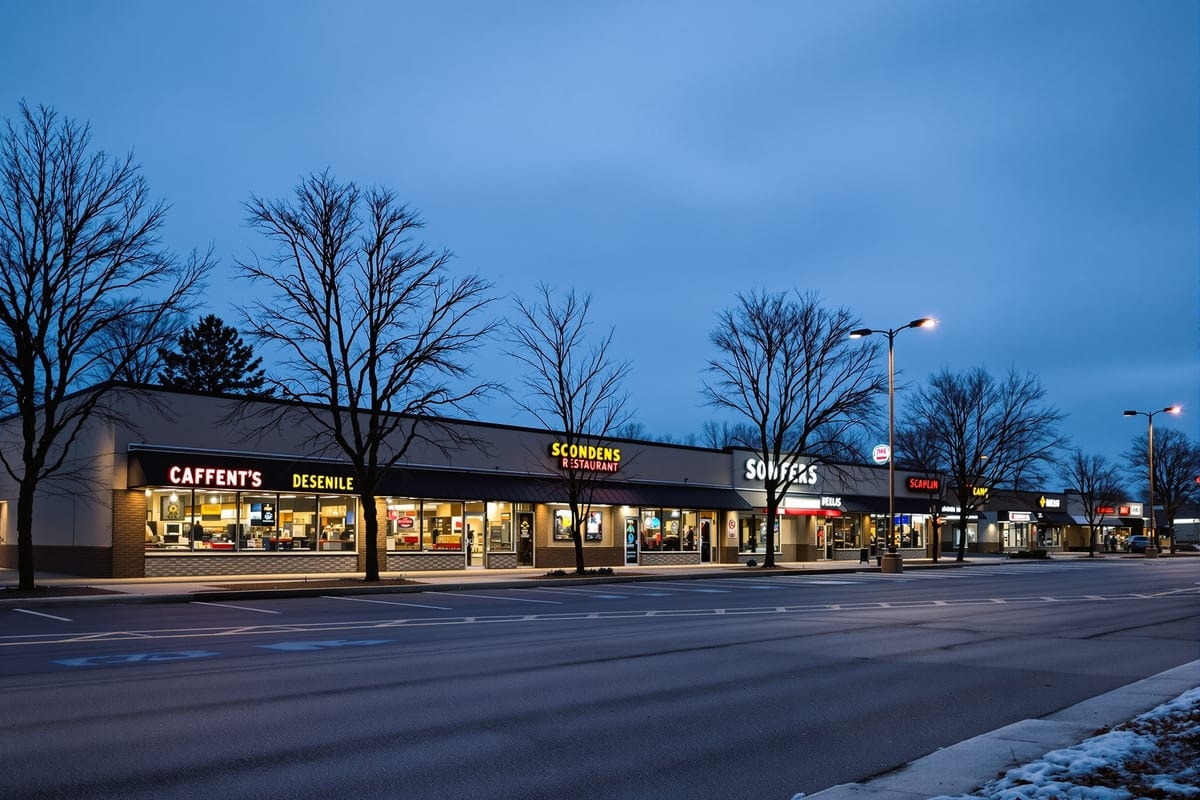
Spice9 did not appear in a vacuum. It sat inside a well-established pattern: Indian restaurants in central Ohio cluster in the northern suburbs, and they cluster there for reasons that have very little to do with food. This page sketches that context — the setting the restaurant operated in.
A larger city than people expect
Columbus is one of the biggest cities in the United States by population and one of the faster-growing large metros in the Midwest, a fact that consistently surprises visitors — Census Bureau data for Columbus puts it well ahead of several cities with far bigger reputations. It is also unusually spread out. Growth through the 2000s and 2010s went outward rather than upward, into a ring of suburbs that filled with housing, office campuses and retail centres more or less simultaneously.
Why restaurants cluster where they do
Suburban restaurant districts are not planned; they accrete, and they accrete around three things.
- Daytime population. Office parks generate a weekday lunch crowd with forty minutes and a fixed budget. That single fact explains the near-universality of the lunch buffet in this kind of location — it is the only format that reliably serves that crowd. More on the format →
- Residential density of the right kind. A restaurant serving a specific cuisine needs enough households who cook that cuisine at home to form a base of regulars who will notice when it is done properly. North Columbus has that for South Asian food.
- Cheap, flexible commercial space. Suburban strip units are relatively inexpensive, come with parking, and can be fitted out for a restaurant without a heritage argument. The cost of installing a tandoor and a commercial extraction system is high enough that this matters.
Once two or three restaurants of a cuisine open in a district, the cluster becomes self-reinforcing: suppliers deliver there, staff live nearby and move between kitchens, and diners learn to drive to that area rather than to a specific address.
The shape of the trade
A suburban Indian restaurant in a district like this typically runs four overlapping businesses at once, which is exactly what Spice9's own homepage advertised: dine-in, takeout, catering and delivery. That is not a menu of options for the customer so much as a description of how the revenue is assembled.
The dining room and the buffet carry the daytime. Takeout and delivery extend the evening beyond the number of tables. Catering — weddings, religious festivals, large family events, corporate lunches — is the part that is invisible to most customers and often the part that makes the year work. Remove any one of the four and the arithmetic gets hard.
Why these restaurants are fragile
They also close, frequently, and usually without explanation. The pressures are structural rather than dramatic: rents that reset on a five- or ten-year cycle, third-party delivery platforms taking a large slice of a growing share of orders, kitchen labour that is genuinely hard to hire and harder to keep, and food costs that move faster than a printed menu can. A restaurant can be well-liked, well-reviewed and busy at lunch and still not clear the gap.
The first half of the 2020s compressed all of that at once. Independent restaurants across the country closed in numbers, and the ones that went were disproportionately mid-sized full-service rooms — too big to run as a two-person takeout operation, too small to absorb a bad year.
What is lost when one closes
Not much, in any measurable sense, and quite a lot in another. A closed restaurant takes its recipes with it. There is rarely a written record: the menu comes down, the listings flip to "closed", the website lapses within a year or two, and the specific way one kitchen made one dish stops existing. Suburban Indian restaurants rarely leave detailed histories.
Spice9's history covers: what the restaurant was, what it served, and what those dishes actually are.