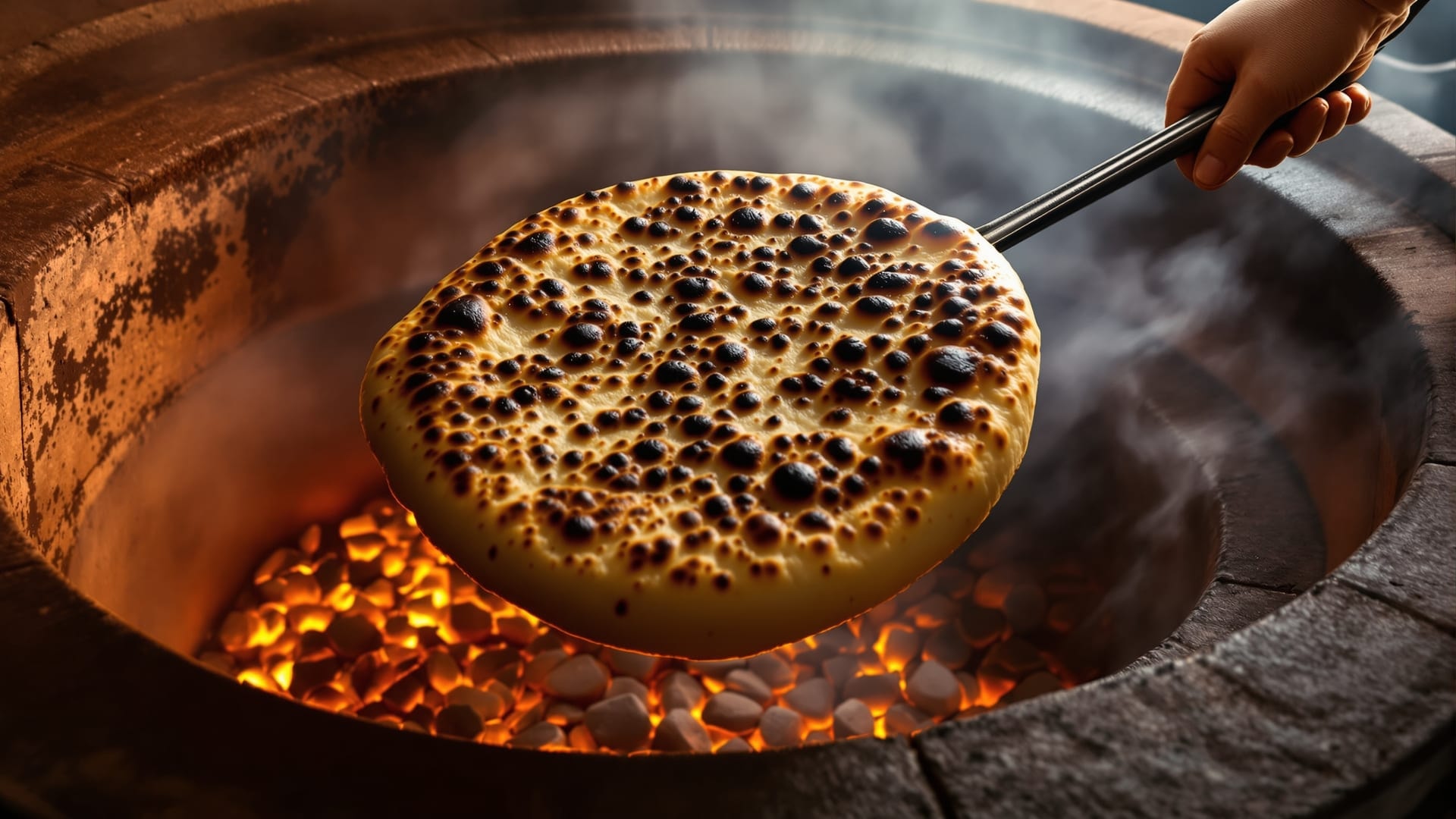
Every Indian restaurant is organised around one piece of equipment. At Spice9, as everywhere, it was the tandoor — the clay oven that produced the naan, the tikka skewers and the kebabs, and the reason a professional Indian kitchen is laid out the way it is.
What a tandoor is
A tandoor is a deep, cylindrical clay oven, narrowing at the top, with a fire at the bottom. In a restaurant it is usually a heavy clay pot set inside a metal drum with insulation packed between them, fired by charcoal, gas or both. It runs extremely hot — far hotter than a domestic oven can reach — and, crucially, it stays hot: the thick clay walls store an enormous amount of heat and radiate it back inward.
That produces a cooking environment nothing else quite matches. Three modes of heat act at once: radiant heat from the walls, convected heat from the rising column of hot air, and direct conduction where dough is pressed against the clay. Food cooks from all sides simultaneously and very fast.
Why the food tastes different
Speed is the whole answer. A chicken tikka skewer in a tandoor is done in a handful of minutes, which means the outside chars — real char, dry and slightly bitter — before the inside has time to dry out. The same piece in a domestic oven at its maximum temperature takes long enough that the moisture is gone by the time any colour arrives.
Fat and marinade dripping onto the coals adds the second half: smoke rises through the chamber and back over the food. That is the flavour people are chasing when they say something tastes "tandoori", and it is why the marinade being thick enough to cling — yoghurt-based, almost always — matters so much.
How naan is made in one
Naan is a leavened flatbread — white flour, yoghurt or milk, a little fat, and yeast or baking powder — which distinguishes it from the unleavened everyday breads like roti and chapati. The dough is soft, wetter than a bread dough has any right to be, and rested.
The process at the oven takes about ninety seconds:
- A ball is flattened and stretched, usually into a teardrop rather than a circle, because it will hang.
- The underside is dampened and the bread is slapped onto a cloth pad, then pressed firmly against the inside wall of the tandoor, where it sticks.
- It puffs and blisters almost immediately. Large dark bubbles form where steam lifts the surface off the clay.
- It is hooked off with a long metal skewer before it dries, and brushed with butter or ghee.
Everything about that is time-critical. Bread made to order and carried straight to the table is a different food from bread made ten minutes early — which is exactly why a buffet service that runs naan continuously to the table, as Spice9's did, is doing something worth noticing. More on the buffet →
The bread list
Spice9's bread section ran past the usual minimum, which is generally a good sign:
- Plain naan — the baseline. Judge a kitchen on this one.
- Butter naan — brushed generously coming out of the oven.
- Garlic naan — chopped raw garlic and often coriander pressed into the surface before it goes on the wall, so the garlic toasts against the clay. The most-ordered variant almost everywhere, and the one reviews of Spice9 mentioned by name.
- Paneer naan — stuffed with the same fresh cheese used across the menu, sealed and rolled out again. Substantial enough to be a dish in itself. More on paneer →
- Assorted basket — the range at once, which is the correct order for a table of four.
Tikka and kebab
The savoury side of the oven starts with a yoghurt marinade: yoghurt for acidity and cling, ginger and garlic, chilli, turmeric, garam masala, sometimes a little oil and lemon. Pieces are threaded onto long skewers, lowered vertically into the chamber, and cooked hanging.
Tikka means pieces — chunks of chicken, paneer or shrimp. Kebabs run from minced-and-moulded seekh kebabs to whole marinated cuts. The classic tandoori chicken is a whole bird, scored and marinated, cooked the same way. Anything that comes out of the oven can then be finished in a gravy, which is the origin of tikka masala: tandoor-cooked pieces dropped into a tomato-and-cream sauce.
Why you cannot really do this at home
You can approximate it, and it is worth doing, but the limit is temperature. A domestic oven tops out well below a tandoor's working heat and has thin walls that lose heat the moment the door opens. The workable substitutes, in order of usefulness:
- A very hot cast-iron pan or a baking steel under a grill on maximum — the best available for naan, because it reproduces the conduction and the top heat at once.
- A charcoal grill with the lid on for tikka and kebabs, which gets you the smoke and most of the char.
- An overnight marinade, which compensates for a lot. The less char you can produce, the more the marinade has to carry.
An old technology
Clay ovens of this general design are ancient and were not invented for Indian food — versions of them appear across Central and South Asia and the Middle East going back thousands of years, and it is better understood as a shared regional technology than as an Indian invention. General-interest food history — Smithsonian Magazine is one reasonable starting point — is worth reading on that longer story. What is distinctly modern, and distinctly restaurant, is the idea that a tandoor should run all day, feeding both a bread station and a grill station at once. That arrangement is barely a century old and it is what most people now think of as Indian restaurant food.
The dishes the oven produced are listed in the menu.