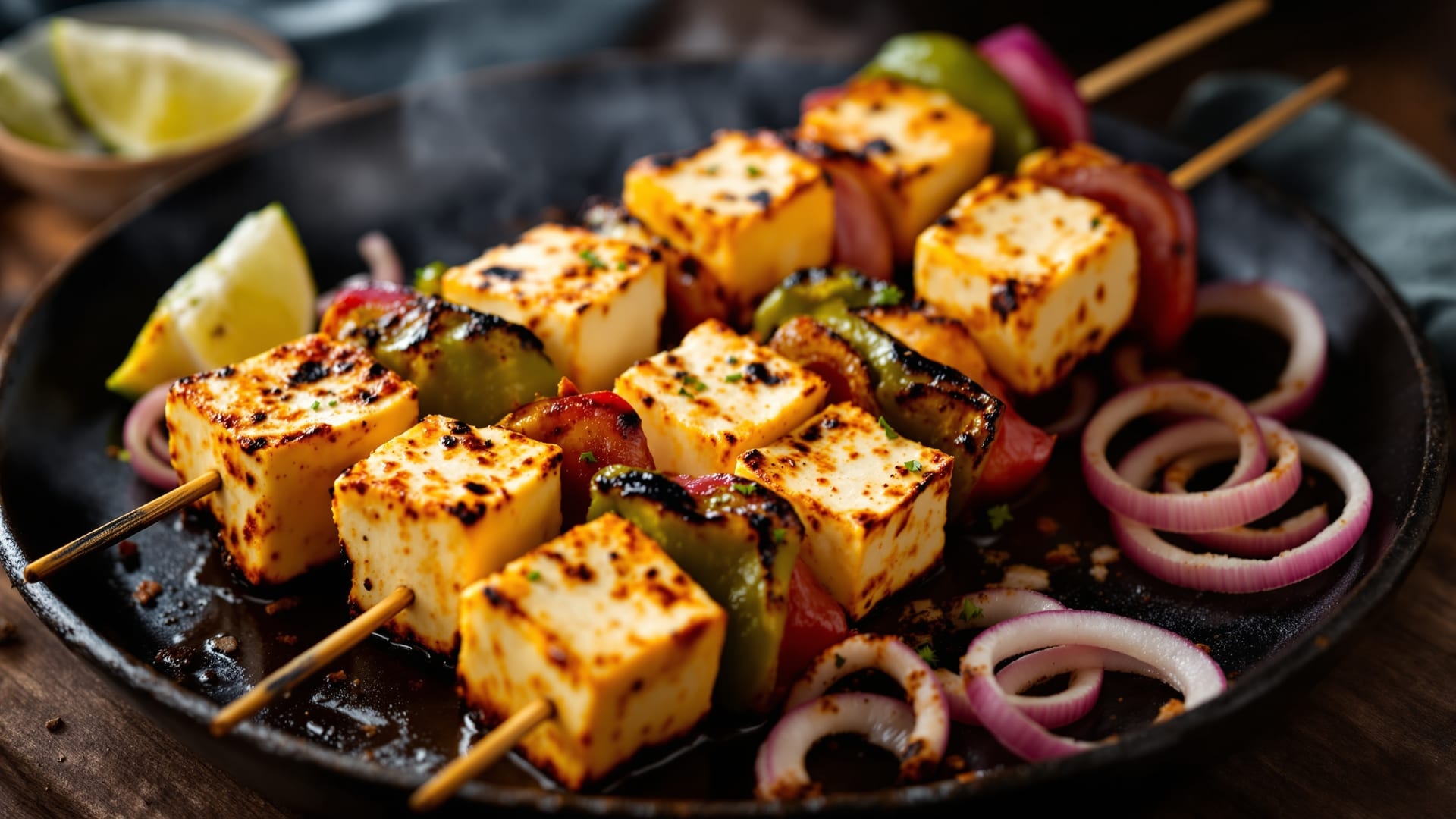
Two of the few photographs Spice9 published of its own food were of paneer dishes — matar paneer and paneer tikka. That is not a coincidence. In an Indian restaurant menu with a serious vegetarian side, paneer is the load-bearing ingredient, and it runs from the appetiser list to the gravies to the rice and the breads.
What paneer actually is
Paneer is a fresh, unaged, non-melting cheese made by curdling hot milk with an acid — lemon juice, vinegar or whey — then draining and pressing the curds into a firm block. There is no rennet, no culture and no ageing. It is made in the morning and used the same day.
The consequences of that are the whole reason it works in Indian cooking:
- It does not melt. Acid-set cheeses lose the protein structure that lets rennet cheeses flow when heated. Paneer cubes hold their shape in a simmering gravy for as long as you like, and they char on a skewer without collapsing.
- It is nearly flavourless on its own — mildly milky and slightly sweet. It is a carrier. Everything paneer tastes of comes from what it was marinated in or simmered in.
- It absorbs slowly but holds well. A marinade needs time to get past the surface, which is why paneer tikka is marinated for hours, not minutes.
- It is soft when fresh and rubbery when old or overcooked. The single most common paneer failure in a restaurant is a block that has been sitting too long, or cubes that have been boiled hard in a gravy instead of added at the end.
As a protein source it does real work in a vegetarian diet, sitting alongside legumes and dairy in the way federal dietary guidance on the dairy group describes — which is part of why it is so central to a cuisine with such a large vegetarian tradition.
Matar paneer
Peas and paneer in a tomato-and-onion gravy: one of the great everyday North Indian dishes and one of the two Spice9 chose to photograph. It is deceptively simple. The gravy is a base of onion, ginger, garlic and tomato cooked down properly until the fat separates out at the edges — the visual cue Indian cooks watch for, and the difference between a gravy that tastes cooked and one that tastes raw and sharp.
Peas bring sweetness and a bit of resistance; paneer brings richness and body. The dish is usually finished with a little cream or cashew paste and a scatter of crushed dried fenugreek leaf, which is the slightly bitter, maple-ish note that makes so many North Indian gravies recognisable without being identifiable.
Paneer tikka
Cubes of paneer marinated in thick yoghurt with ginger, garlic, chilli, turmeric and garam masala, threaded onto skewers with pepper and onion, and cooked in the tandoor until the edges blacken. It is the vegetarian answer to chicken tikka and it is genuinely better suited to the oven than the chicken is, because paneer cannot dry out the way lean meat can.
The yoghurt is doing two jobs: acidity to open the surface, and body so the marinade clings through the heat rather than dripping into the coals. A paneer tikka that arrives pale has been cooked somewhere other than a tandoor. More on the oven →
Palak and saag paneer
The spinach family. Blanched greens are puréed into a gravy — coarse or smooth, depending on the kitchen — and paneer cubes are folded in at the end. Palak means spinach specifically; saag is the broader word for leafy greens, which in northern India often means mustard greens rather than spinach.
The technical challenge is colour. Spinach cooked long turns olive drab; the bright green version requires blanching and shocking the leaves first, then adding the purée late. A vividly green palak paneer is a sign of a kitchen paying attention, not of food colouring.
Paneer tikka masala and the rest of the range
Everything the tandoor cooks can also be sauced. Paneer tikka masala takes the same charred cubes and finishes them in a tomato-and-cream gravy — the vegetarian version of the dish most people order first. Beyond that, restaurant menus run paneer through kadai (a drier, pepper-forward preparation), butter/makhani gravies, chilli paneer on the Indo-Chinese side, paneer fried rice, and paneer-stuffed naan. Spice9's card carried that spread, which is what a menu looks like when the vegetarian section is designed rather than bolted on.
Cooking with it at home
Three things worth knowing, if you buy a block.
- Soak it in hot salted water for ten minutes before use if it has been refrigerated. It softens the block considerably and is the single easiest improvement available.
- Add it late. Paneer needs to be heated through, not cooked. Long simmering makes it squeaky and tight.
- If you fry it, fry it hard and fast in a very hot pan, then rest it. Slow frying dries it out before it colours.
For the broader picture of how a menu like this is built, see vegetarian Indian dining and the Spice9 menu.