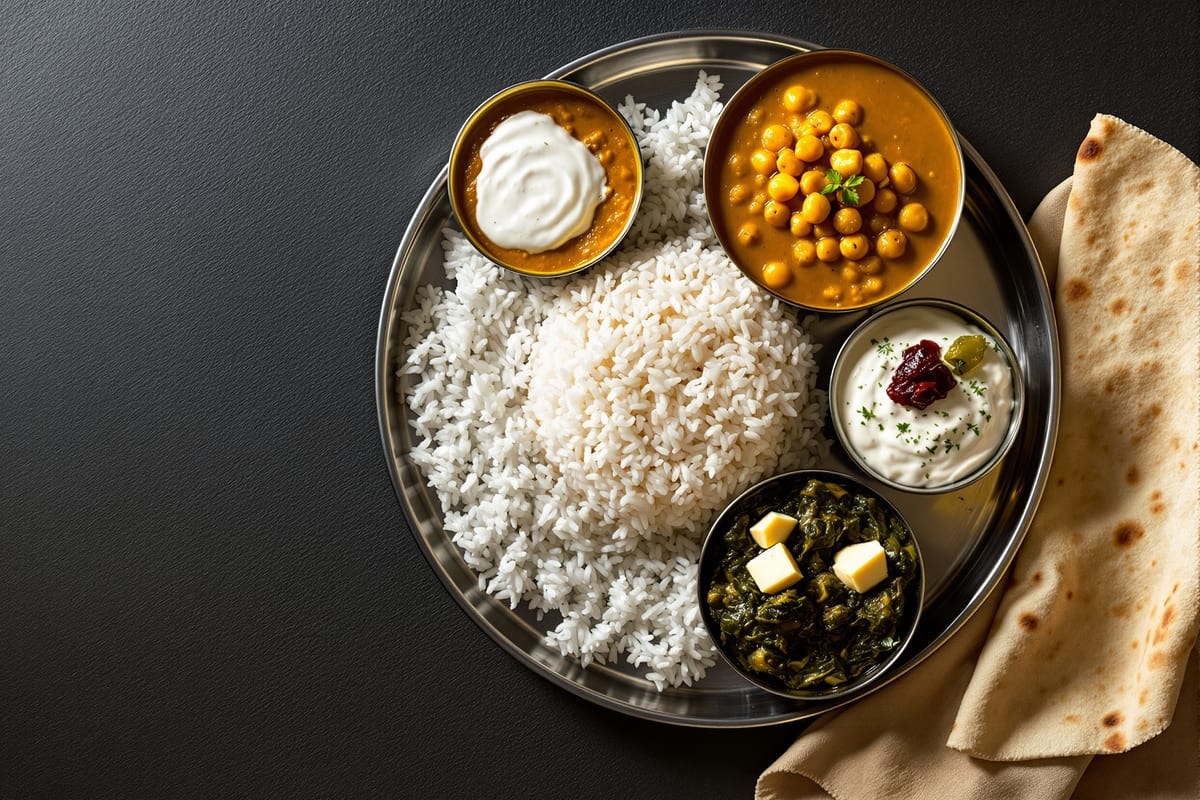
The thing people wrote about Spice9 most consistently was the vegetarian range — the phrase that recurs is simply that there were a lot of options. This page explains why that is normal for a well-built Indian menu rather than a special feature, and what is actually worth ordering when you are in front of one.
The arithmetic
Indian cuisine is not a meat cuisine with vegetarian accommodations. An enormous proportion of everyday cooking across the subcontinent contains no meat at all — for religious reasons in several traditions, for economic reasons everywhere, and simply as habit. India has among the largest vegetarian populations in the world by any measure.
The consequence for a restaurant menu is structural. When the base repertoire is majority-vegetarian, the vegetarian dishes are the ones the kitchen makes most often, has the most practice at, and cares most about. They are not a reduced version of the real menu; in many kitchens they are the real menu, and the meat dishes are the additions.
The load-bearing dishes
Four families carry almost every vegetarian Indian menu.
Dal
Lentils, in a dozen forms. This is the single most important dish in the cuisine and the one that most reliably tells you about a kitchen — it is cheap, it cannot be disguised, and doing it well requires only attention. A thin, watery, under-seasoned dal is a warning. A good one has body, a properly cooked tempering of whole spices poured over at the end, and enough sourness or sharpness to stop it being merely comforting.
Common versions include a simple yellow lentil dal, the black-lentil dal makhani cooked for hours with cream and butter, and lighter southern preparations with tamarind and curry leaf.
Chana and legumes
Chickpeas in a dark, tamarind-sharp gravy — chana masala — is the other backbone dish, and it is naturally vegan. Kidney beans (rajma), black-eyed peas and split peas all appear in similar treatments. Legumes plus a grain is the foundation of the diet, and it is nutritionally coherent in the way federal dietary guidance on beans, peas and lentils describes: beans, peas and lentils sit in the protein group alongside meat and dairy, not beneath them.
Paneer
The fresh non-melting cheese that lets a vegetarian dish occupy the same place on the plate as a meat dish — substantial, protein-rich and able to be charred, sauced or fried. Spice9 ran it right through the card. The full paneer page →
Vegetables, dry and wet
Potato-and-cauliflower, okra, aubergine, cabbage, mixed vegetable curries, spinach in every form. The important distinction is dry (sabzi-style, sautéed, little or no sauce) versus wet (in gravy). A good order includes one of each, because a plate of nothing but gravies is monotonous no matter how good each one is.
Vegan, and the dairy problem
Indian food is often assumed to be an easy vegan cuisine and it is only half true. The vegetable and legume repertoire is largely vegan already. But dairy is deeply embedded: ghee as a cooking fat, cream in the northern restaurant gravies, yoghurt in marinades, milk in breads, paneer as a headline ingredient.
What is reliably vegan or easily made so: chana masala, most dals (ask about ghee and cream), tamarind and coriander chutneys, most dry vegetable dishes, plain rice, and the Indo-Chinese fried rices without egg. What generally is not: anything described as makhani or korma, most naan, raita, and anything with paneer in the name.
Ordering well
The mistake most people make with an Indian menu is ordering three dishes from the same family — three creamy tomato gravies, ordered under three different names. The menu's length disguises how much overlap there is. A better approach for a table:
- One creamy gravy — the comfort anchor.
- One sharp or hot dish — chana masala, a vindaloo-family dish, something with tamarind.
- One dry vegetable, for texture.
- A dal, always.
- Rice and bread both, not one or the other — they do different jobs.
- Raita and a pickle. The cheapest items on the menu and the ones that make the rest work.
Why the buffet suited it
All of the above is why an Indian lunch buffet is such an unusually good deal for a vegetarian: the format naturally puts six or seven vegetarian dishes out at once, which is exactly the variety the cuisine is designed around and exactly what is hard to achieve ordering à la carte for one person.
Spice9's buffet was described in those terms repeatedly. The menu shows the repertoire it drew from, and the spice box page covers the flavours underneath it.