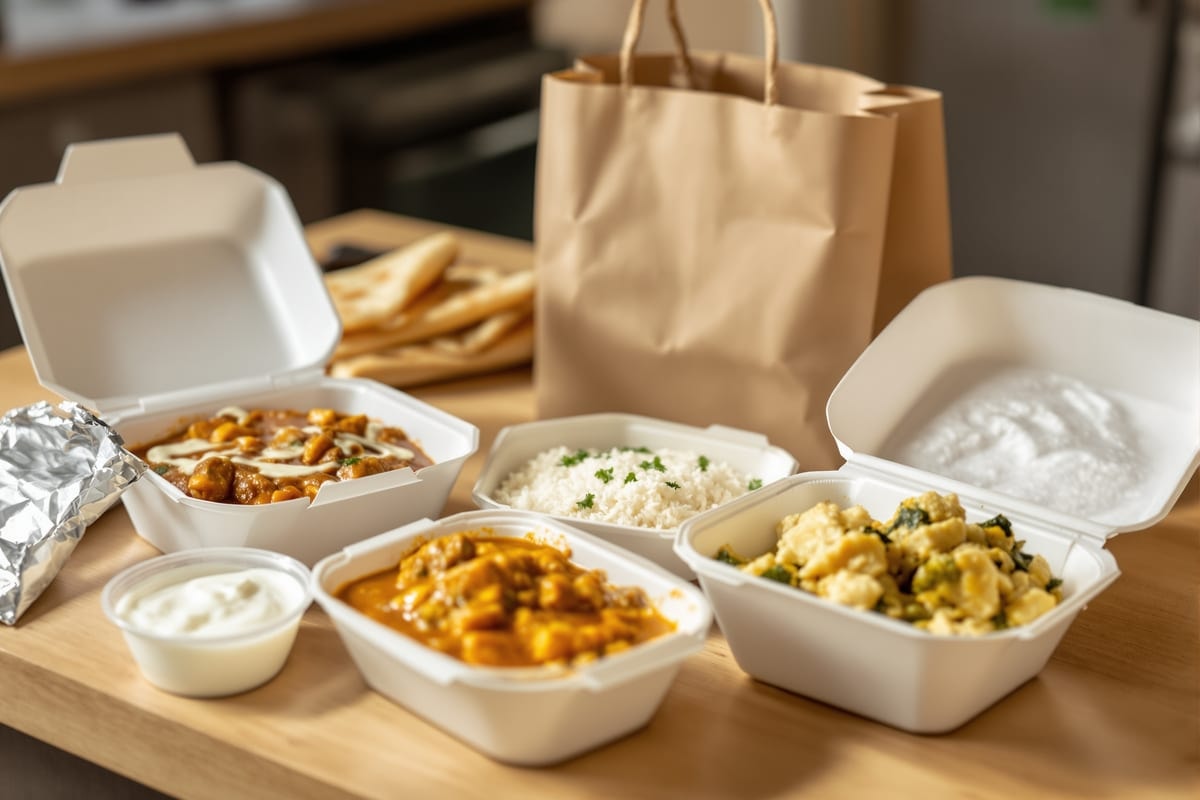
Spice9 listed four ways of working, and two of them happened outside the dining room: takeout and delivery. The restaurant is permanently closed and takes no orders. This page is about the thing itself — what happens to Indian food between a restaurant kitchen and a kitchen table, and why some dishes make that trip far better than others.
Why Indian food travels well
It travels better than most cuisines, and the reason is structural. A large part of the repertoire is braised or simmered — gravies, dals, curries of every family — and braised food is, by definition, food that has already spent a long time hot and wet. Twenty minutes in a container does not undo that. Some of it genuinely improves: a tomato-and-cream gravy at home an hour later has had time to settle, and the spices have had longer to bloom into the fat.
Contrast that with a cuisine built on things served the instant they leave the pan. A fried egg does not survive a delivery bag. A dal does not notice.
What does not survive
Three categories suffer, and any restaurant that packs a lot of takeout knows them.
- Bread. Naan is at its peak for about four minutes. Wrapped in foil it steams itself, and what arrives is soft and slightly damp rather than blistered and dry-edged. It is still good; it is not the same object. Anyone who has eaten naan at the table and naan out of a bag knows the difference immediately. Why that is →
- Fried starters. A samosa in a sealed container is a samosa in a steam chamber. The good move is a vented container or, better, none at all.
- Anything with a deliberate texture contrast. Crisp fried onions on a biryani, a papad on the side, a fresh salad against a hot dish — all of it homogenises in transit.
How a kitchen packs it
Good Indian takeout packing follows a few rules that are worth knowing as a diner, because you can tell a lot about a kitchen from the bag.
- Sauce and starch travel separately. Rice in its own container, gravy in another. Combined, the rice absorbs the sauce and both are gluey by the time they arrive. Biryani is the exception — it is a rice dish, not a rice-and-sauce dish, and it is packed as one thing with the raita on the side.
- Bread goes on top and stays out of the sauce heat. Foil for warmth, paper if the kitchen is prioritising texture over temperature.
- Cold things are physically separated from hot things. Raita, chutneys and salads should never be in the same warm compartment as the gravies — for texture, and for the reason in the next section.
- Containers are filled, not overfilled. A container filled to the lid arrives leaking; one filled to two-thirds arrives intact.
Temperature, briefly
The delivery leg is the one part of a restaurant meal that leaves professional control. Insulated bags exist to keep hot food above the range where bacteria multiply quickly, and the practical advice for the person at the other end is simple: eat it, or refrigerate it, promptly rather than leaving it out on the counter for the evening. The USDA guidance on leftovers and food safety is the plain-English reference for leftovers and reheating, and it applies to a takeout container exactly as it applies to a home-cooked pot.
Reheating it properly the next day
Indian leftovers are among the best leftovers there are, if you reheat them like a cook rather than like a microwave.
- Gravies: a pan on low with a splash of water, stirred. They thicken in the fridge; they are meant to be loosened, not blasted.
- Rice: a covered pan or a covered dish with a spoonful of water, so it steams rather than dries. Reheat it once, thoroughly, and eat it.
- Naan: thirty seconds in a dry, very hot frying pan, one side then the other. This is the single most worthwhile piece of advice on this page — it brings back most of what the bag took away.
- Fried items: a hot oven or an air fryer, never a microwave.
The business side
For an independent restaurant, takeout and delivery are not free money. Third-party platforms take a substantial cut of every order, and a kitchen running a dining room, a buffet, a catering operation and a delivery queue at once is running four businesses with one set of burners. Restaurants that survive it usually do so by keeping a tight, deliberately short delivery menu of the dishes that travel — which is exactly why so many Indian takeout menus look like a compressed version of the dine-in card.
The Spice9 menu shows the full repertoire; the catering page covers the other off-premises half of the trade.