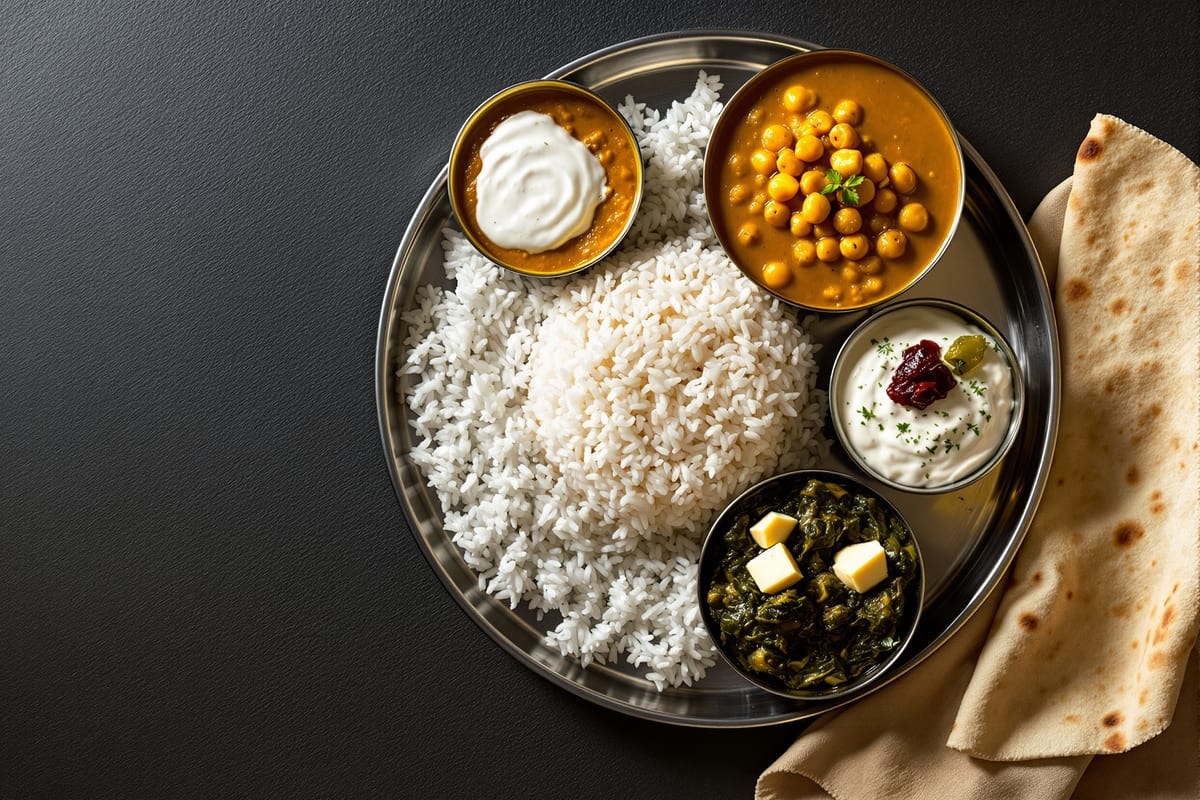
A spoonful of raita beside a biryani, a little pickle at the edge of the plate: the small accompaniments deserve a closer look. Yoghurt belongs to the fermented-food family. Pickles need a more careful answer. And lassi, another yoghurt-based food, has a research story that is much less settled than enthusiastic headlines suggest.
Beside the plate
Think first about the meal. Raita brings a cool, creamy contrast to the rice and spices of a Hyderabadi biryani. Pickle supplies a sharper accent; chutney is another spoonful to set against the main dish. Those are kitchen roles. Enjoying that contrast does not require a claim about what any of them does inside the body.
The useful question is how each food was made. A bowl of yoghurt, a vinegar pickle and a baked bread can all involve acidity or microbes somewhere in their story, but they do not belong in the same category. Fermentation describes a process, and the details of that process matter more than the size of the bowl.
What makes a food fermented
A 2021 international expert consensus statement on fermented foods defines the category through deliberate microbial growth and the resulting changes to food components through enzyme activity. In plainer kitchen language, microorganisms take part in making the food what it is. Sourness alone does not establish that this happened.
The panel lists yoghurt, kefir, most cheeses and non-heated fermented vegetables among fermented foods with living microorganisms present. It also includes foods that have been fermented but no longer contain living fermentation organisms when eaten. That is an important distinction: how a food was produced and what is still alive in it at the table are separate questions.
Yoghurt, raita and lassi
For raita, the cultured ingredient is the yoghurt. That gives the bowl a clear starting point in the fermented-food family without turning a familiar accompaniment into a health claim. The word describes the yoghurt's production; it does not tell a diner what to expect from a spoonful.
Lassi belongs in the wider yoghurt conversation. A 2026 review of research on lassi describes a traditional yoghurt-based fermented beverage, with sweet and salty versions and spiced drinks in a desi buttermilk style. These are variations within a food tradition, rather than a single drink whose properties can be assumed to be identical everywhere.
The same review says human studies of lassi remain comparatively sparse. Suggested health effects are hypotheses drawn largely from research on other fermented dairy foods, rather than findings confirmed in lassi trials. A review discussing possibilities is not the same thing as a trial demonstrating them. Keep that limitation attached whenever lassi appears in a conversation about the gut.
Not every pickle is fermented
The National Center for Home Food Preservation's explanation of pickling separates fermented pickles from fresh-pack or quick-process pickles. It describes regular dill pickles and sauerkraut as fermented examples; quick-process pickles are covered with vinegar and seasonings without fermentation. These examples explain the methods, rather than identifying any particular Indian pickle.
In the fermented preparations it describes, salt favours desirable bacteria while inhibiting others. In a vinegar preparation, an acidic result does not itself demonstrate microbial fermentation. Brine, vinegar, sourness and the word pickle are therefore insufficient clues on their own. The method is the deciding detail.
At an Indian meal, let the pickle be the sharp accent it is there to provide. A chutney can be considered for its flavour and texture in the same way. Neither the position of a condiment beside the rice nor its tang tells you whether it contains living fermentation organisms.
Where heat comes in
The expert panel's classification of fermented foods and living microorganisms puts bread among foods whose fermentation organisms are absent after baking. Chemically leavened bread is listed as unfermented. The panel also places heat-treated fermented vegetables in the category without living microorganisms. Fermentation earlier in the process does not guarantee live cultures at the end.
That distinction is useful alongside the naan and tandoor discussion: the leavening method matters, and so does the oven. A bread's browned surface is not evidence of living cultures. Nor does heating erase the fact that a food was fermented earlier. Process and final contents need to be read separately.
What the gut research has found
Stanford's 2021 report on a fermented-food diet trial described 36 healthy adults randomly assigned to a 10-week diet containing either fermented foods or high-fibre foods. In this small trial, the fermented-food group showed increased diversity of gut microbes. Diversity in the high-fibre group stayed stable on average. Those are observations from a particular study, not a prediction for an individual diner.
The timing needs care. The report's account of sample collection describes three weeks before the trial diet, the 10-week diet itself and four weeks afterwards: a 17-week study period in total. Calling it a 17-week diet would blur an important part of the design.
The consensus panel also notes that microorganisms from fermented foods are unlikely to remain in the intestine long term, and that effects vary between individuals. Eating a cultured food should not be pictured as permanently installing its cultures in the gut. The food and the person both matter.
Reading the evidence soberly
A 2019 review by King's College London researchers described very limited clinical evidence for most fermented foods in gastrointestinal health. At that time, it found no randomised controlled trials examining gastrointestinal effects of kombucha, miso, kimchi or tempeh. An appealing explanation from laboratory work cannot fill that gap by itself.
A 2025 systematic review of fermented foods in healthy adults included 25 studies with 4,328 participants and reported differences in bowel-movement frequency and stool consistency. Its authors rated the certainty of evidence highly variable and mostly low. That caution belongs beside the findings, rather than being dropped when the results are retold.
Back at the table, the useful distinctions are modest: yoghurt is cultured, pickles depend on their preparation, and heat can leave a fermented food without living cultures. Enjoy raita, pickle and chutney for their place in the meal. Their flavours need no promise about digestion to make sense beside the rice.